
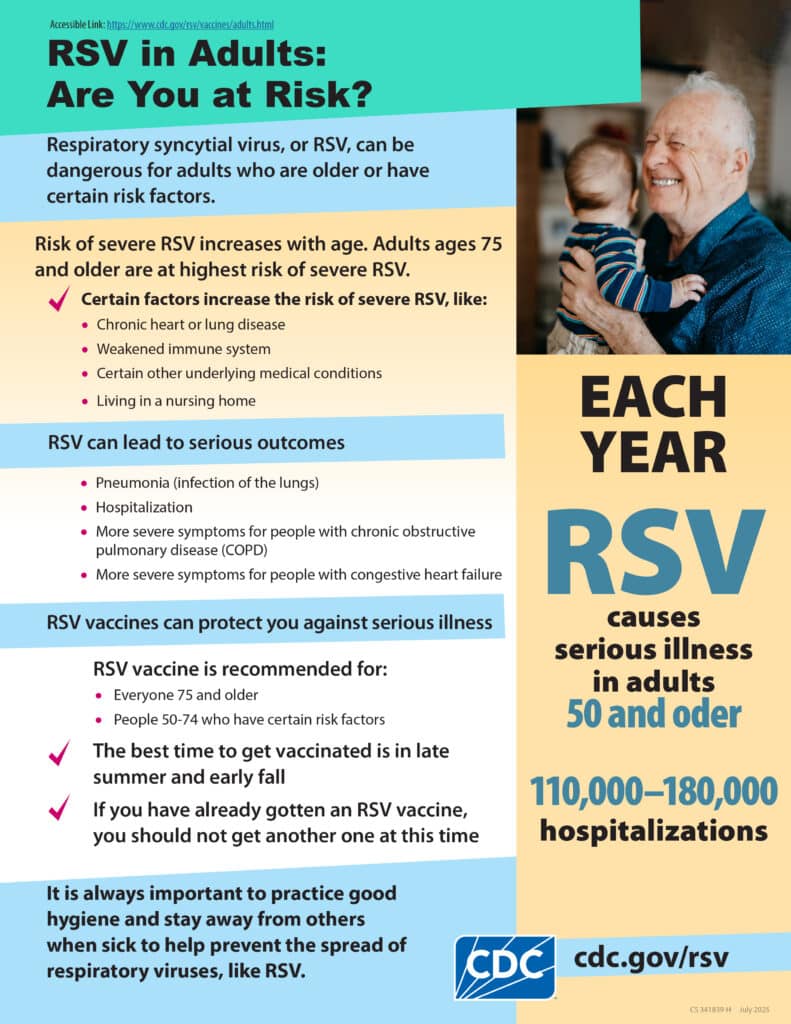
For several weeks, our community has experienced an increase in RSV (respiratory syncytial virus) activity. We are happy to report data shows cases are beginning to decline. While this downward trend is positive news, RSV continues to pose a health risk—particularly for adults with certain underlying conditions—making awareness and prevention as important as ever.
What RSV Looks Like in Adults
RSV commonly causes mild, cold-like symptoms in adults. However, in some cases, the virus can lead to more serious illness, including pneumonia or worsening of chronic heart and lung conditions. Severe RSV infections may require hospitalization, especially among older adults and those with preexisting health concerns.
Who Is Most at Risk
According to the Centers for Disease Control and Prevention (CDC), adults at highest risk for severe RSV illness include:
- Adults ages 75 and older
- Adults with weakened immune systems
- Adults with chronic heart or lung disease
- Adults with other underlying medical conditions
- Adults living in nursing homes or long-term care facilities
How to Protect Yourself and Others
Health officials recommend several important steps to reduce the risk of RSV infection and severe illness:
- Get vaccinated if eligible. The CDC recommends RSV vaccination for adults 75 and older, as well as adults ages 50–74 who are at increased risk for severe RSV.
- Practice good hygiene. Wash hands frequently, cover coughs and sneezes, and stay home when feeling sick.
- Consult your healthcare provider. If you’re unsure about your risk level or whether vaccination is right for you, speak with your healthcare professional.
If you are feeling unwell, our Redicare team is here to help with same-day care.
For emergent or severe symptoms, please visit our Emergency Department immediately.
As RSV activity slows in our area, continued precautions will help protect those most vulnerable in our community. Thank you for doing your part to keep everyone safe and healthy.
Source: “RSV in Adults,” CDC.gov | Use does not imply CDC/HHS endorsement.